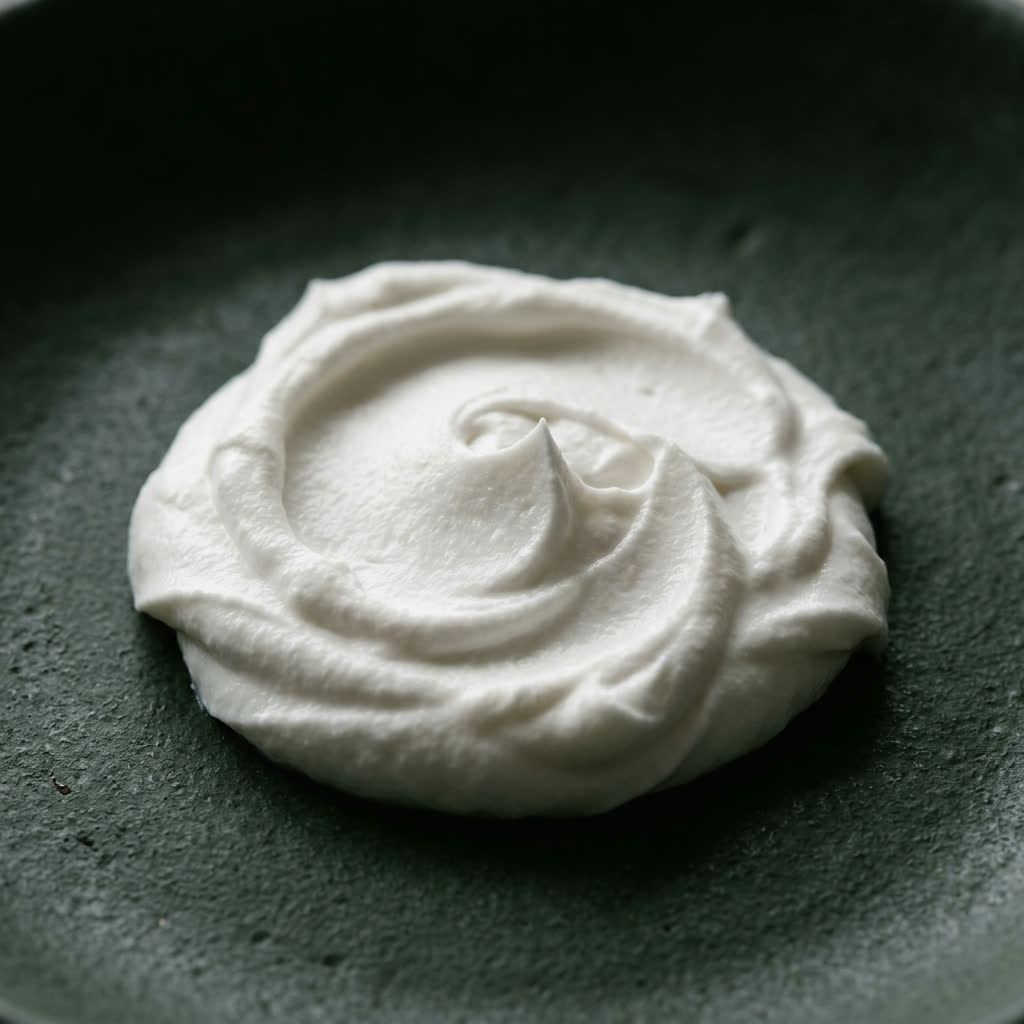
Three years ago, if you'd asked a beauty buyer about beef tallow, they'd have pointed you to the chip shop. Today, rendered beef fat — whipped into balms, tinted with beeswax, sold in amber jars — is one of the fastest-growing ingredients in skincare, and the story of how it got there says a lot about where beauty culture is heading.
The trend took off on TikTok around 2023 and 2024, where creators began filming themselves smoothing rendered fat onto their faces and crediting it for glowing, calmed skin. A 2025 cross-sectional analysis in the Journal of Cosmetic Dermatology counted more than 50,000 posts under the beef tallow hashtag, with the most popular videos claiming everything from acne clearance to reduced inflammation. Some devotees, dermatologist Hannah Kopelman told Healthline, were bypassing beauty retail altogether: "Followers are even visiting butcher shops to source unprocessed tallow."
It didn't stay niche. Trend tracker Spate named beef tallow the top-searched skincare ingredient by year-on-year growth in its 2025 report, adding roughly 17,400 monthly Google searches in the US alone. Industry analysts now size the global tallow skincare market at around US$277 million in 2025, projected to reach about US$403 million by 2032 — a compound growth rate of roughly 5.5 per cent. Fortune Business Insights runs similar numbers for the tallow balm category specifically: about US$280 million in 2025, heading towards US$460 million by 2034.
For a product that is, at base, cow fat, that is an extraordinary trajectory.
Why people swear by it
The appeal isn't purely vibes. Tallow's champions point to its fatty acid profile, and here the chemistry is genuinely interesting. Rendered beef fat is rich in oleic, palmitic and stearic acids — the same fats found naturally in human skin, as George Washington University dermatology chair Adam Friedman noted to National Geographic. Advocates argue this makes tallow unusually "biocompatible": closer to your own sebum than a lab-built cream.
Functionally, tallow behaves as an occlusive — the same broad family as lanolin and petrolatum. It sits on the skin, slows water loss, and softens dry, flaky patches. Cleveland Clinic dermatology resident Angela Wei acknowledged as much: "Beef tallow contains fatty acids, such as stearic acid and oleic acid, that can provide moisturising and hydrating properties." Tallow also carries trace fat-soluble vitamins — A, D, E and K — which feature heavily in marketing copy, though how much of them actually absorbs through skin is an open question.
Then there's the quality tier the industry has built on top. "100 per cent grass-fed" has become the category's key selling point, per Fortune Business Insights. Fat from grass-finished cattle does differ measurably from feedlot fat — higher omega-3 fatty acids and conjugated linoleic acid, and a different vitamin profile — and sellers argue that difference matters on skin. What's worth knowing: no published human trial has compared grass-fed and grain-fed tallow as topical products. The distinction is real in the fat; its significance on your face is untested.
The deeper driver may be cultural. Tallow sits at the junction of clean beauty, the carnivore-diet corner of the internet, and what marketers call "ancestral skincare" — a Gen Z-led nostalgia for single-ingredient products a great-grandmother might have used. As dermatologist Hallie McDonald told Cosmetics Business, "There's a distrust of mainstream skin care and dermatology advice in some corners of social media, driven by frustration with chronic skin conditions and the trial-and-error nature of treatment." For people burned by ten-step routines that didn't work, one honest-looking jar of fat has obvious appeal.
What the evidence actually shows
Here is where the story gets uncomfortable for the boom. In 2024, researchers published a scoping review in Cureus — the most thorough look yet at tallow on human skin. Of 147 studies screened, only 19 met inclusion criteria, and most were indirect: animal studies, tallow blended with other ingredients, or historical uses. The authors found reported moisturising benefits but concluded there are "significant research gaps" in tallow's use on human skin, with short- and long-term side effects essentially unknown. There are no randomised controlled trials pitting tallow against proven moisturisers.
Rajani Katta, a board-certified dermatologist and clinical professor at the University of Texas in Houston, put it plainly to National Geographic: "This is a trend where the popularity has gotten ahead of the science."
The claims environment compounds the problem. That 2025 Journal of Cosmetic Dermatology analysis found a substantial mismatch between online enthusiasm and the supporting evidence, and noted that social media promotion of tallow is widespread and often financially biased — many of the loudest voices are selling it. Toronto dermatologist Geeta Yadav offered National Geographic a blunt observation about the category: "There's a really low barrier to entry when it comes to starting a beauty brand."
There's also the regulation gap. Tallow balms aren't standardised or formally regulated as therapeutic products. "Beef tallow doesn't have a standard formulation, and it's not developed in a controlled way," Wei noted — and pure tallow contains no preservatives, so it can go rancid faster than conventional creams. Her overall read: "There's no evidence that shows beef tallow has any additional benefits for your skin beyond being a natural moisturiser."
What dermatologists are telling patients
None of this makes tallow snake oil — clinicians generally agree it can moisturise. Their published advice is about fit and caution, and it's fairly consistent across the coverage.
Dermatologists quoted by Cleveland Clinic, Healthline and National Geographic advise patch testing any tallow product on a small area first, since reactions can occur even without a beef allergy. They caution that tallow's thick, comedogenic texture makes it a poor match for acne-prone skin, and that it can aggravate rosacea and seborrheic dermatitis. UK-based doctor Anil Sharma told Healthline that for most complexions "it could cause more harm than good," reserving it — sparingly, a couple of times a week — for very dry or eczema-prone skin. Several, including Wei, suggest talking to a dermatologist before adding it to a routine at all.
One point matters especially for Australian readers: tallow offers no sun protection whatsoever, and Cleveland Clinic notes heavy oils may even increase sun sensitivity. Whatever moisturiser you land on, sunscreen stays non-negotiable.
The beef tallow boom is a fascinating case study in modern beauty: a plausible ingredient, a genuine consumer revolt against complexity, and a nine-figure market — all running well ahead of the clinical literature. The science may yet catch up and vindicate the jar of fat. Until it does, the most honest thing anyone can say about tallow is that it moisturises, probably, and that almost everything else is still a claim.
Sources
- National Geographic — Beef tallow as skin care? Experts explain what's truth—and myth
- Cleveland Clinic — Is Beef Tallow Good for Your Skin?
- Healthline — Why People on TikTok Are Slathering Their Face with Beef Tallow
- Dermatology Times — Clinical Guidance Needed as Patients Turn to Tallow for Skin Conditions
- Journal of Cosmetic Dermatology — Beef Tallow-Based Skincare Claims in Social Media: A Cross-Sectional Analysis
- Cureus (via ResearchGate) — Tallow, Rendered Animal Fat, and Its Biocompatibility With Skin: A Scoping Review
- Fortune Business Insights — Tallow Balm Market Size, Share, Trends & Growth Report
- Cosmetics Business — Beef tallow: inside Gen Z's obsession with the skin care ingredient
- Forbes — The Beef Tallow TikTok Skincare Trend: Here Are The Concerns