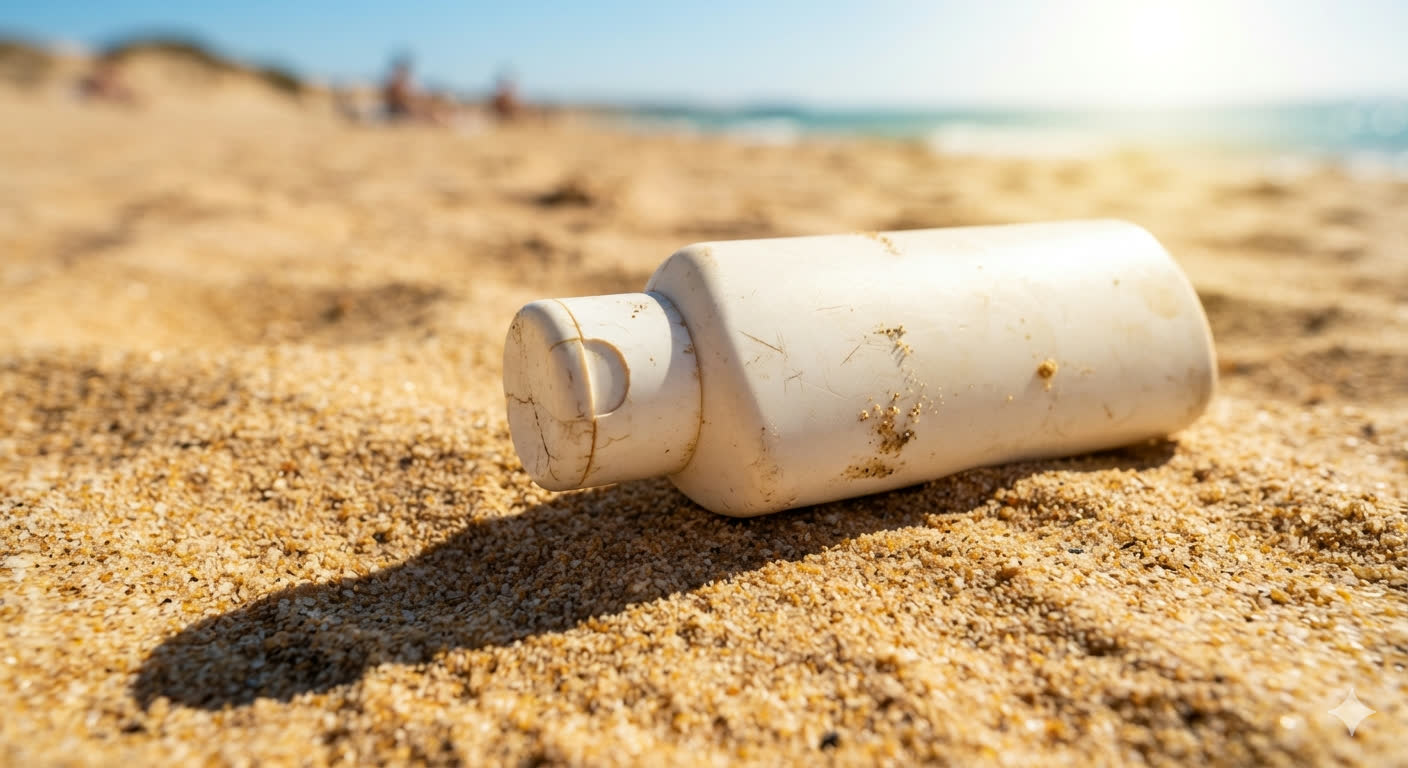
It's a familiar January ritual: you fish last summer's sunscreen out of the beach bag, give it a suspicious sniff, and wonder whether it still counts. The short answer is that sunscreen genuinely does expire — it's not a suggestion like the date on a jar of honey. The longer answer is that in Australia, how you've stored the bottle matters at least as much as the date printed on it.
What the expiry date actually promises
In Australia, sunscreens sold as primary sun protection are regulated by the Therapeutic Goods Administration (TGA) as therapeutic goods — the same broad framework that covers medicines. That's why every bottle carries an expiry date and storage instructions, and why those aren't decorative. The expiry date is the manufacturer's evidence-backed promise that the product will still deliver its labelled SPF and broad-spectrum protection until that date, provided it's been stored as directed. Under the TGA's regulatory guidelines for sunscreens, stability must be demonstrated through formal testing, and Australian sunscreens are typically labelled for storage below 30 degrees Celsius.
Both halves of that promise matter. An SPF50+ that's in date but has spent two summers in a glovebox may no longer be an SPF50+. Conversely, a bottle past its expiry hasn't necessarily turned to water — but nobody, including the manufacturer, will vouch for it, and there's no way to check SPF at home. Cancer Council Australia's advice is simple: check the expiry date before you apply, and don't use sunscreen that's out of date.
Unopened and stored cool, most sunscreens are formulated to last around three years — which is why a bottle bought late last season is usually fine this season, provided it lived indoors rather than in the car.
Heat is the real enemy
The fastest way to kill a sunscreen before its time is heat, and Australian summers supply plenty of it. A parked car is the classic offender: cabin temperatures can soar far past the "below 30°C" storage condition on the label within an hour, and it takes surprisingly few of those cycles to degrade a formula. Beach bags left in full sun, windowsills, boat lockers and tradie utes do the same job more slowly.
Heat damages sunscreen in two ways. It can degrade the UV filters themselves, and — often first — it breaks down the emulsion holding the formula together. A sunscreen is a carefully engineered mix of oil, water, filters and stabilisers; once heat splits that emulsion, the filters may no longer spread in the even film that SPF testing assumes, even if the actives are technically intact. Stability studies on commercial sunscreens back up what regulators assume: elevated temperatures accelerate breakdown, which is exactly why the TGA requires storage conditions to be tested and printed on the label.
The fixes are cheap. Keep your main bottle in a cupboard at home, not in the car. At the beach, tuck the bottle in the shade, wrap it in a towel, or throw it in the esky — the same place you'd put anything else you didn't want cooked. And treat any bottle that's summered in a vehicle as suspect, whatever its date says.
Mineral, chemical, and how formulas age differently
Not all filters age the same way, which explains some of the folklore around zinc "lasting forever".
Zinc oxide and titanium dioxide — the mineral filters — are inorganic and highly photostable. They don't break down under UV, and they're not prone to chemical degradation over time. That stability is real, but it only extends to the filter, not the bottle: a mineral sunscreen's emulsion can still separate, thicken or go gritty with heat and age, leaving the zinc unevenly distributed and the protection patchy.
Some organic ("chemical") filters are less rugged. Avobenzone, the workhorse UVA filter, is well documented in the peer-reviewed literature as photounstable — it degrades with UV exposure unless the formula includes stabilising ingredients, which modern sunscreens do. Formulation chemistry has largely solved this on the skin, but it's a reminder that these are reactive molecules in a delicate balance, and prolonged heat can shift that balance in ways the expiry testing never anticipated.
The practical upshot: whatever the filter type, judge the bottle by its date, its storage history and its condition — not by the assumption that one family is immortal.
How to spot a bottle that's turned
Sunscreen usually tells you when it's gone. Signs worth binning a bottle over:
- Separation — watery liquid running out ahead of the cream, or an oily layer that won't shake back in
- Texture changes — grittiness, clumping, or a formula that's turned noticeably runnier or thicker than you remember
- Colour changes — yellowing or darkening
- Smell — a sour, rancid or simply "off" odour compared with fresh product
Any of these means the emulsion has broken down, and the even film your SPF rating depends on is no longer guaranteed.
One honest caveat: if you're caught out at midday with nothing but a dubious bottle, degraded sunscreen almost certainly still offers more protection than bare skin, and using it once beats burning. But that's a fallback, not a plan — you can't see how much protection has been lost, and Australian UV levels punish optimism. Pair it with shade, a shirt, a hat and sunglasses, and replace the bottle before your next outing.
Here's the reframe worth ending on: if your sunscreen keeps reaching its expiry date, you're not using enough of it. Applied at the recommended rate — roughly a teaspoon per limb, reapplied every two hours outdoors — a family gets through bottles in weeks, not years. Expired sunscreen is usually a symptom of under-application, and fixing the second problem quietly solves the first.
Sources
- Therapeutic Goods Administration — Australian regulatory guidelines for sunscreens (ARGS), Version 3.0
- Cancer Council Australia — Advice on how to choose, apply and store sunscreen
- Cancer Council NSW — 6 most common questions about sunscreen
- The Skin Cancer Foundation — Ask the Expert: Does a Sunscreen Stay Effective After Its Expiration Date?
- Consumer Reports — Does Sunscreen Expire?
- PubMed — Photodegradation of avobenzone: stabilization effect of antioxidants
- ResearchGate — Photostability of commercial sunscreens upon sunlight exposure
- Healthline — Does Sunscreen Expire?